



Padel vs. Pickleball: The Showdown of Modern Sports

When it comes to emerging sports, two names are stealing the spotlight: Padel and Pickleball. Both games promise fun, and fast-paced action and are perfect for all ages. But while they might share similarities, their origins, courts, equipment, and gameplay set them apart. Here’s your ultimate guide to understanding the differences—and picking your side in this epic showdown.
1. Origins: Where It All Began
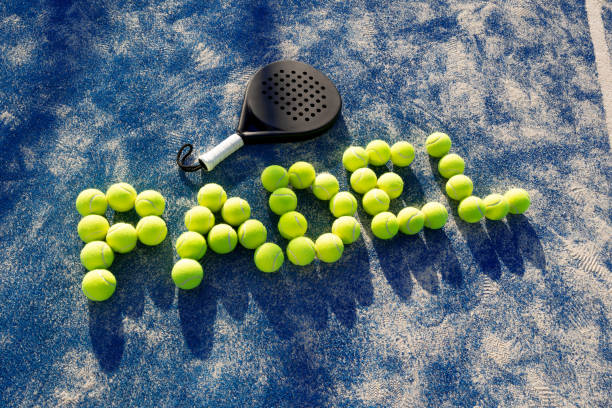
Padel
Thanks to Enrique Corcuera in Mexico, Padel came to life in the late 1960s. He envisioned a smaller, tennis-like game that could be played in a confined space, designing the first court at his home. From there, the sport exploded in Spain and Argentina, becoming the second-most popular sport in Spain after soccer.
Pickleball
In 1965, three American dads—Joel Pritchard, Bill Bell, and Barney McCallum—set out to entertain their kids. Using ping-pong paddles, a perforated plastic ball, and a makeshift court, they created Pickleball. Its simplicity and family-friendly nature have turned it into one of the fastest-growing sports in the U.S. today.
2. Court Setup: Enclosed Action vs. Open Play
Padel Courts
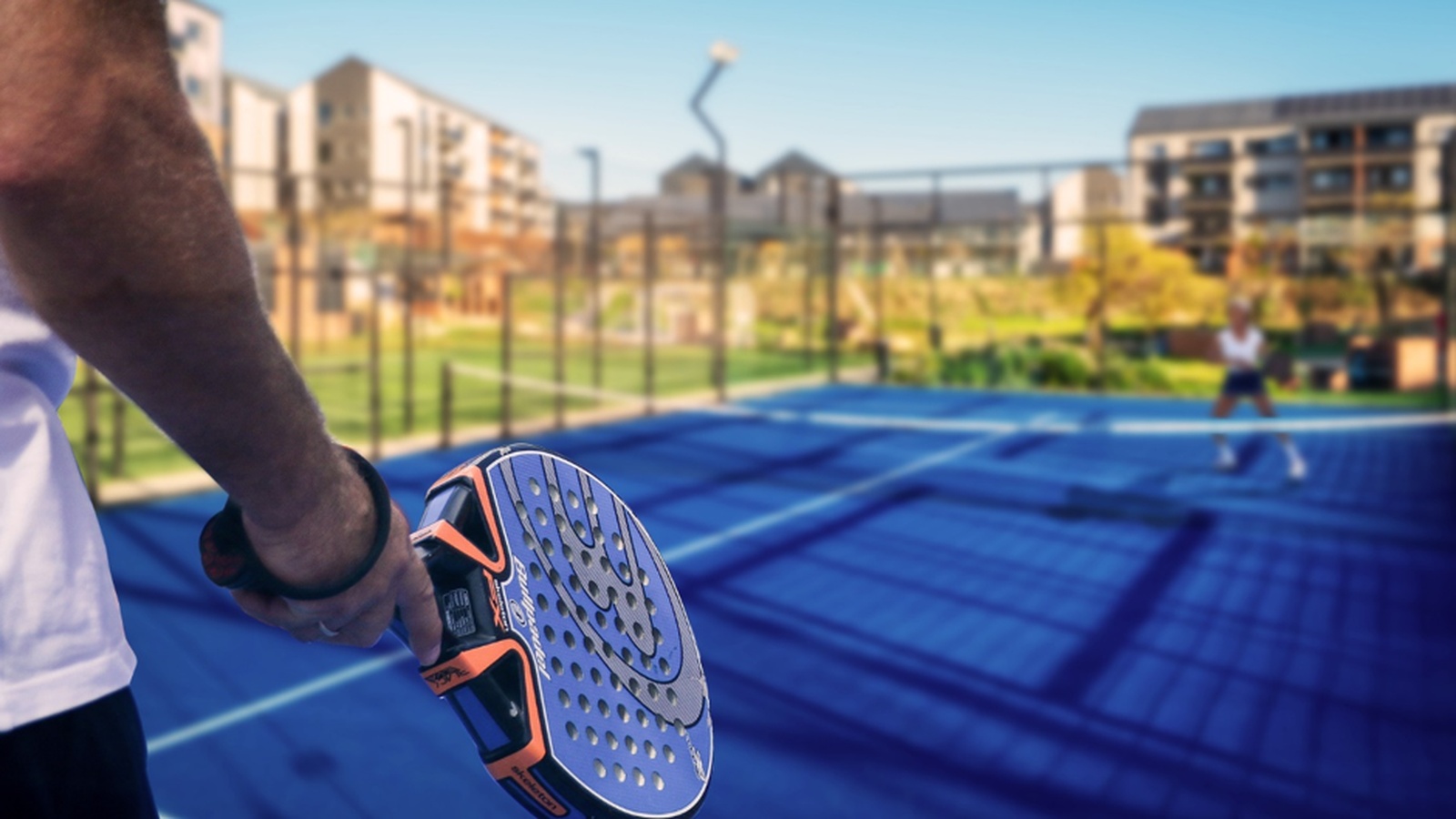
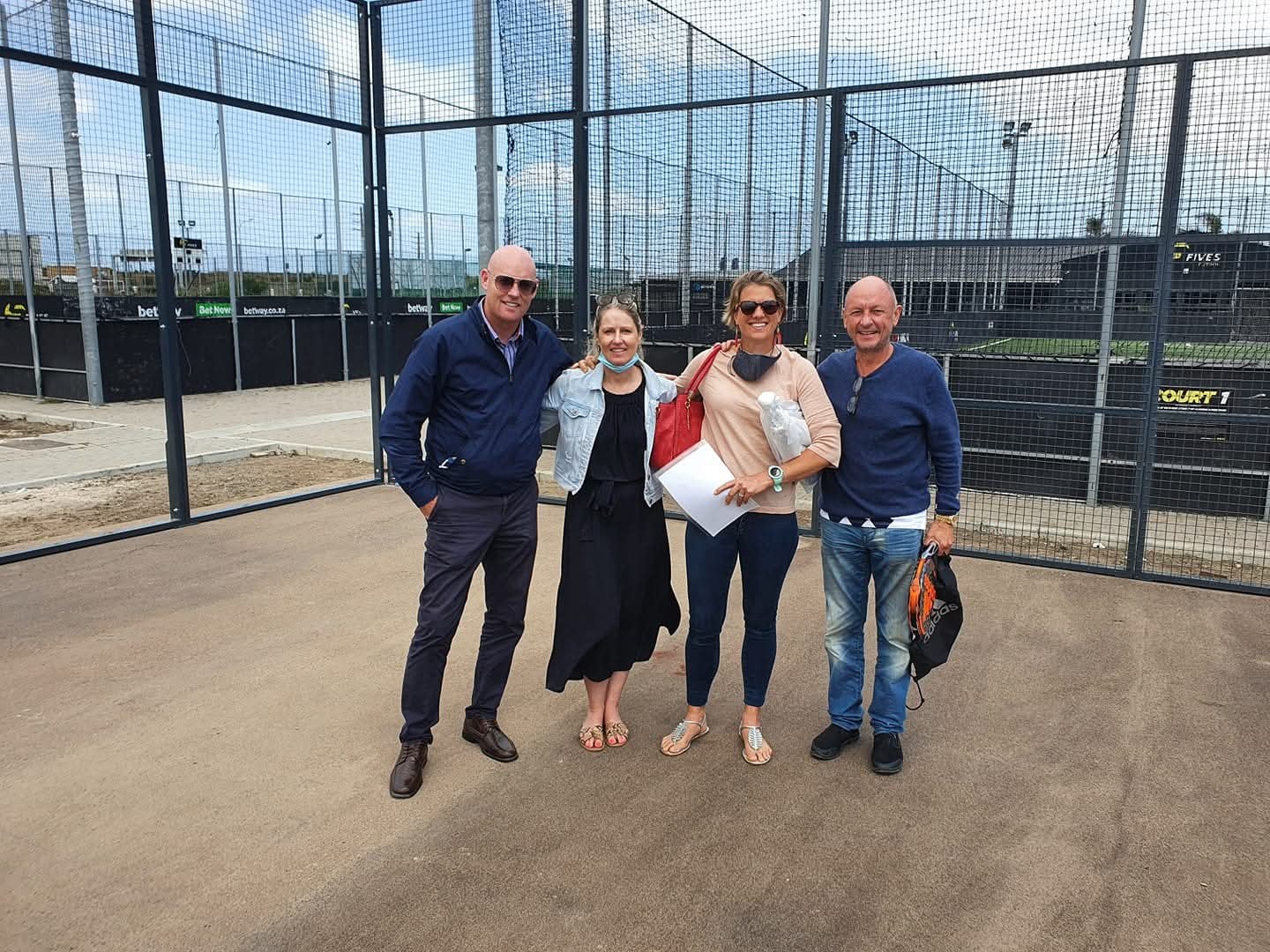
Padel courts measure 10×20 meters and are surrounded by glass or mesh walls. These walls aren’t just decorative—they keep the ball in play, creating thrilling rallies that demand quick reflexes and clever positioning. A net divides the court, and matches are typically played in doubles.
Pickleball Courts
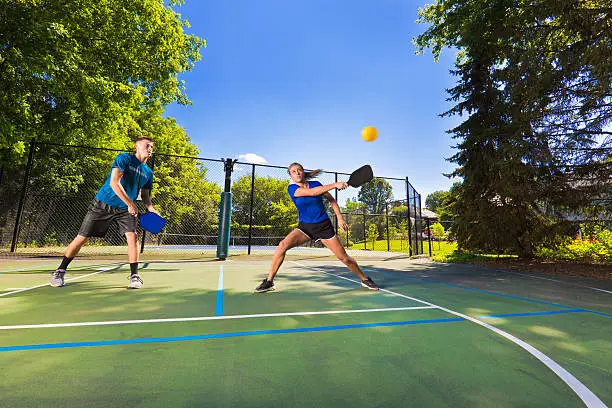
Pickleball courts are smaller, at 6.1×13.41 meters (similar to badminton courts), with no enclosures. The net sits lower, and there’s a unique “kitchen zone” near the net where volleying is a no-go. This rule emphasizes placement over raw power.

3. The Gear: Paddles, Balls, and Materials
Padel Equipment
- Paddles: Solid, perforated paddles made of carbon fiber or fiberglass for better control.
- Balls: Look similar to tennis balls but are lower-pressure to slow down the bounce.
Pickleball Equipment
- Paddles: Bigger, lighter paddles crafted from wood or modern composite materials.
- Balls: Lightweight, perforated plastic wiffle balls that move slower and can be impacted by the wind.
4. Gameplay: Power vs. Precision
Padel
Padel is a high-energy, physically demanding game where players use walls to extend rallies. It’s all about teamwork, positioning, and soft, strategic shots rather than sheer power. With doubles being the norm, communication is key.
Pickleball
Pickleball is a bit slower but no less competitive. Strategy reigns supreme here—particularly with shots like the “dink,” a soft lob over the net that forces opponents to scramble. Matches reward patience, precision, and quick reflexes over brute force.
5. The Rules: A Quick Breakdown
Padel Rules
- Serves are underhand and land diagonally in the opponent’s service box.
- The ball can bounce off the ground and walls before being returned.
- Scoring mimics tennis with sets and tiebreaks.
Pickleball Rules
- Serves are underhand, and the ball must bounce once on each side before volleys.
- The “kitchen zone” prohibits net smashes.
- Games are played to 11 points, with points only won on the serving team’s rally.
6. Popularity: Who Plays Where?
Padel dominates in Europe and Latin America, particularly in Spain and Argentina, where it’s deeply embedded in sports culture. Millions play it regularly.
Pickleball thrives in North America, where it’s especially popular among older adults. It`s accessibility and social nature have made it a favourite, though younger players are starting to jump on the bandwagon.
Final Thoughts: Which Game is for You?
Padel is for those who crave fast-paced, dynamic play where strategy, movement, and teamwork shine.
Pickleball is perfect for players who enjoy a slower pace with plenty of tactical, calculated moves.
Both games bring people together, offering a chance to connect, compete, and have fun. So why not try both and decide for yourself?
The Smasher
Share this content: