
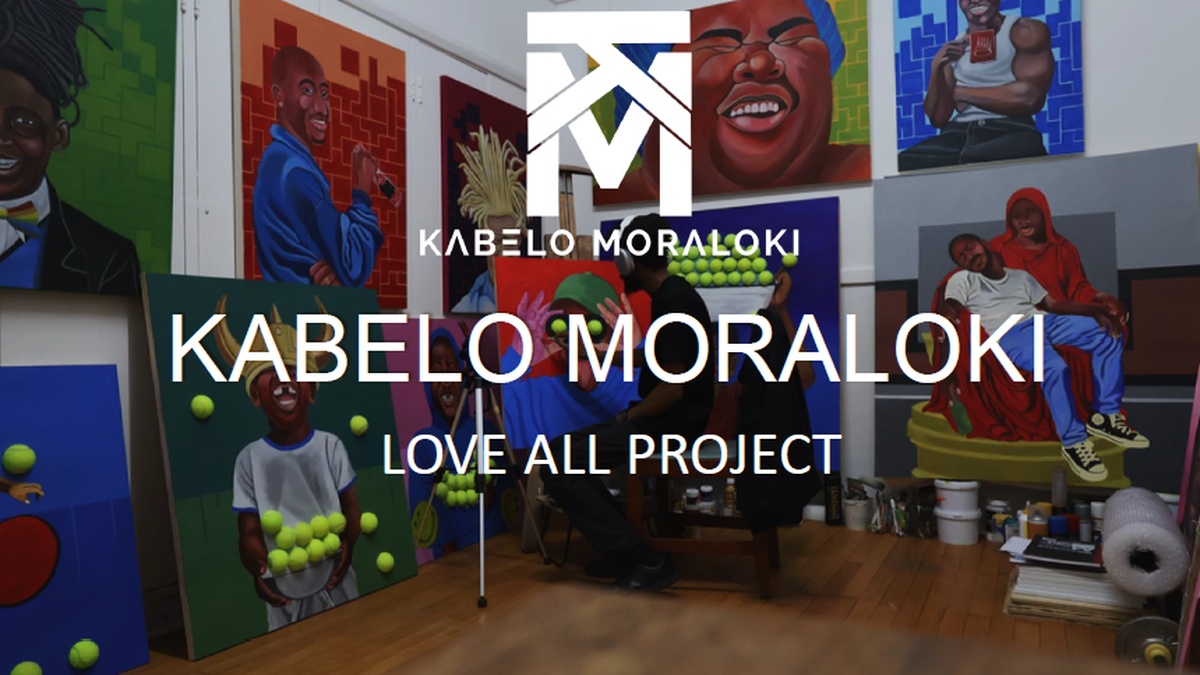

When Padel Becomes Art
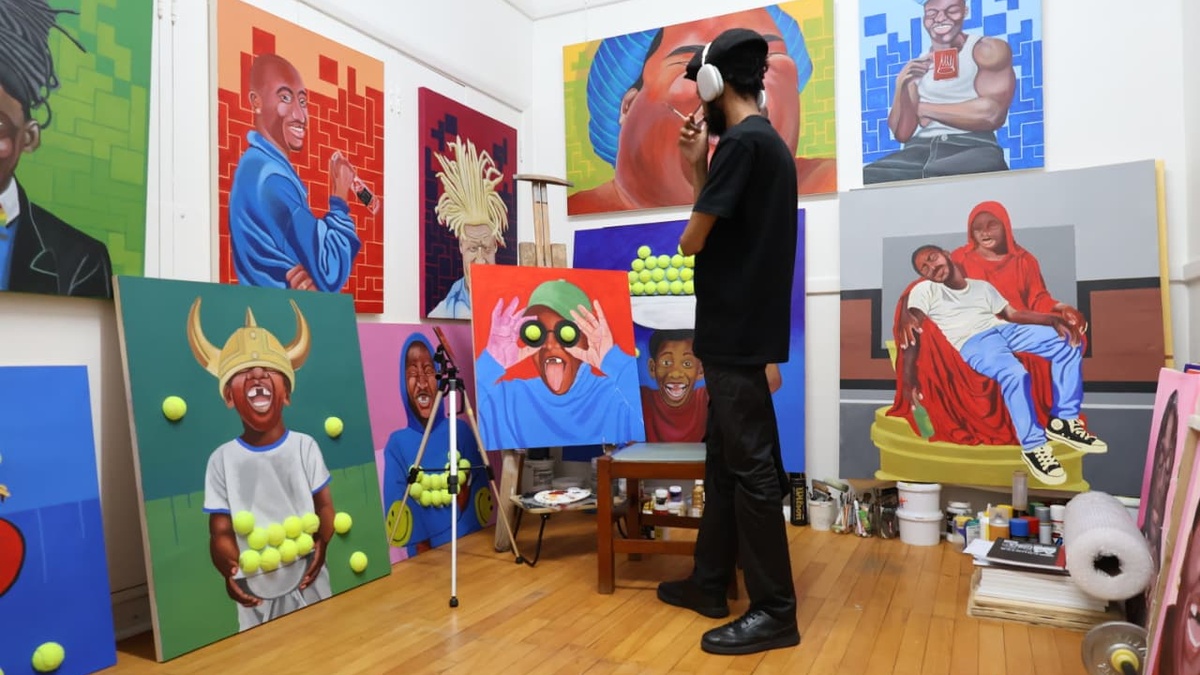
How a South African artist, Kabelo Moraloki, is transforming used padel balls into powerful works of art that celebrate creativity, sustainability, and community.
What happens to a padel ball after the final point has been played?
For most players, the answer is simple. It gets replaced, tossed into a coaching basket or quietly finds its way into the nearest bin. It has done its job and it’s time for a new one.
For South African artist Kabelo Moraloki, that’s precisely where the story begins.
Every worn padel ball carries a history that can’t be measured by its bounce. It has been part of hard-fought rallies, first lessons, weekend tournaments and countless conversations between friends. It has travelled from serve to volley, from celebration to disappointment, becoming part of moments that matter long before it reaches the end of its playing life.
Rather than seeing waste, Moraloki sees possibility.
Through his Love All Project, he transforms discarded padel balls into striking mixed-media artworks that explore joy, healing and human connection. The result is more than an innovative art project. It is a celebration of the culture surrounding one of the world’s fastest-growing sports and a reminder that creativity often begins where others see an ending.
From Mamelodi to the studio
Like many artists, Moraloki’s journey started long before anyone knew his name.
Growing up in Mamelodi, east of Pretoria, he discovered a love for drawing while still at primary school. Encouraged by his uncle’s sketches and inspired by classmates who shared the same passion, art quickly became more than a pastime. It became a way of understanding the world around him.
His development was shaped through community art programmes, collaborations with fellow artists and years of learning, experimenting and refining his craft. From the Mamelodi Arts and Crafts Forum to artist residencies and exhibitions across South Africa, every experience helped shape a distinctive artistic voice built on emotion, colour and storytelling.
Today, working from Cape Town, Moraloki has established himself as one of a new generation of South African artists whose work speaks to both personal experience and universal emotion.
His paintings are layered, textured and expressive. They don’t tell viewers what to think. Instead, they invite them to bring their own experiences into the work.
That openness has become one of his defining characteristics.
Seeing value where others don’t
The Love All Project began with a simple question.
What if a used padel ball wasn’t the end of something, but the beginning?
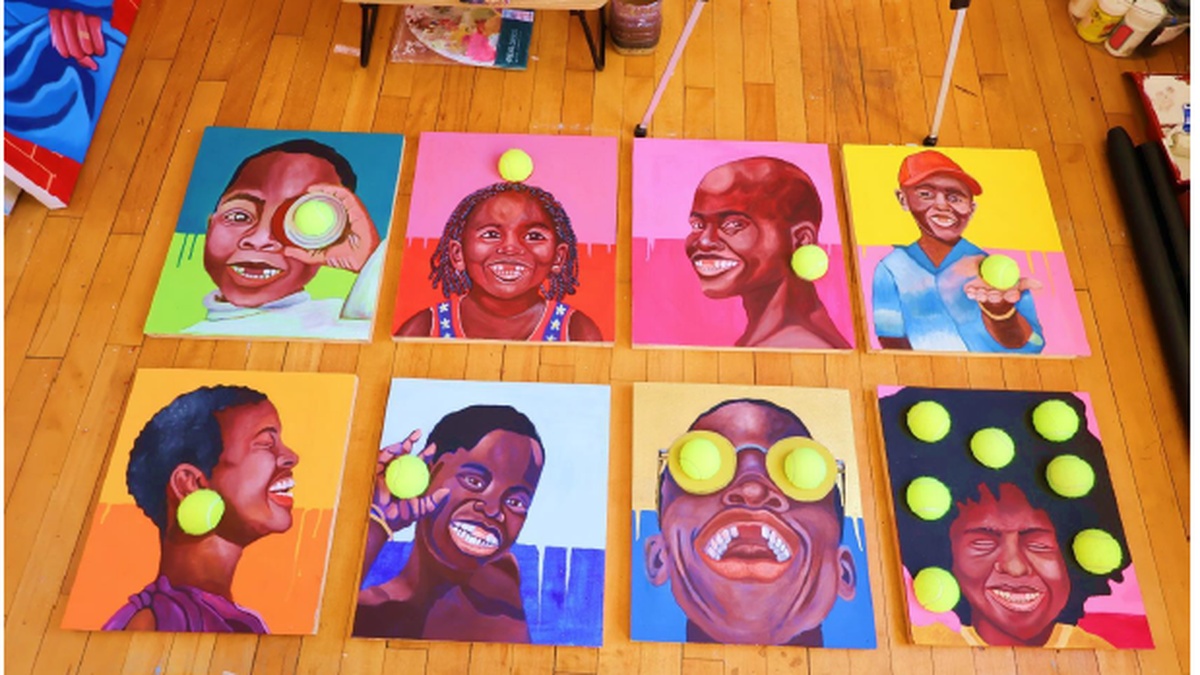
Working alongside Amazeballs and Nordee Padel, Moraloki started experimenting with incorporating used padel balls directly into his artwork. What emerged was unlike anything currently found within the local padel landscape.
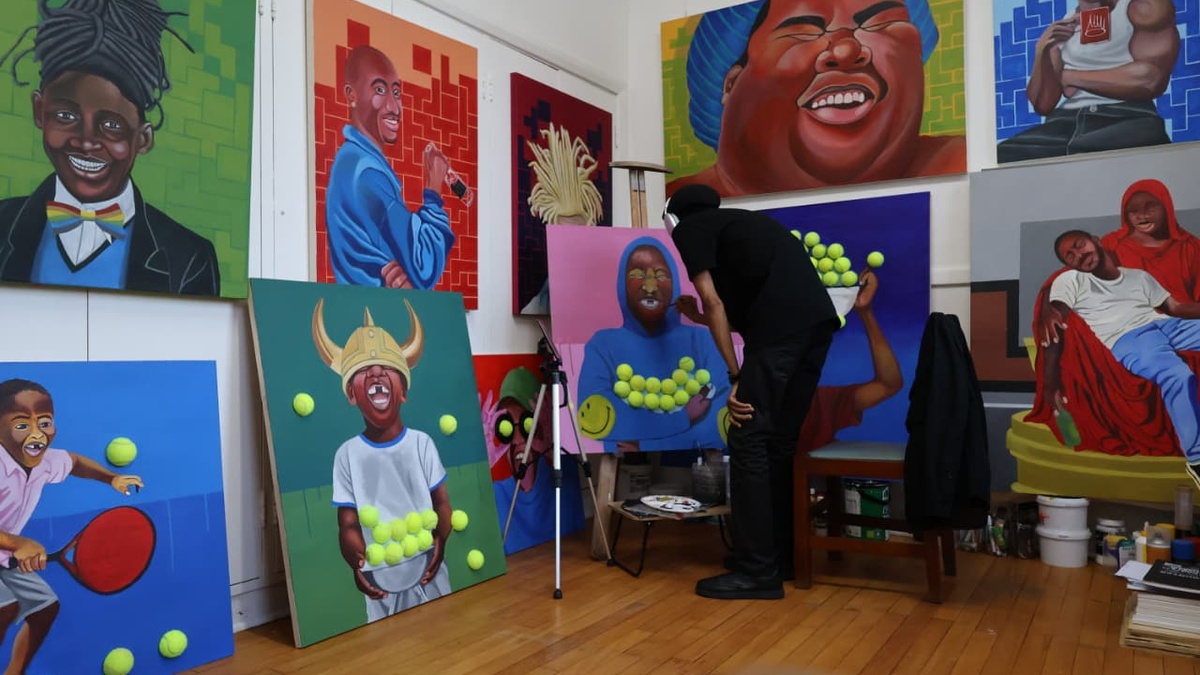
The balls are no longer hidden away or discarded. They become part of the artwork itself, creating texture, depth and movement while carrying a significance that goes far beyond their physical appearance.
Each one has already lived a life.
Some have been hit thousands of times.
Some have been part of someone’s first lesson.
Others have decided tournament matches or social games that ended with laughter rather than trophies.
Every mark tells part of a story, even if nobody knows exactly what that story is.
By giving those balls a second life, Moraloki preserves something that would otherwise disappear.
More than sustainability
It’s easy to describe the Love All Project as recycling.
It is, but that description barely scratches the surface.
The project asks us to think differently about value.
Modern sport generates enormous amounts of waste, from packaging and apparel to equipment that has reached the end of its useful life. Padel balls are no different. Their performance declines quickly and replacing them becomes part of the game.
Moraloki challenges the assumption that usefulness ends when performance does.
His work proves that an object can lose one purpose while gaining another.
That’s what makes the project compelling. Sustainability isn’t presented as a lecture or marketing slogan. It becomes something visual, tangible and emotional.
The artwork tells its own story without needing statistics to support it.
Reflecting the spirit of padel
The rise of padel has never been driven solely by competition.
People are drawn to the game because of the community that surrounds it. Clubs have become social spaces where friendships are formed, business relationships begin and families spend time together. The experience extends well beyond the sixty minutes spent on court.
That sense of connection is woven through Moraloki’s work.
His paintings explore happiness, harmony and healing, themes that feel remarkably aligned with the culture developing around padel in South Africa.
As the sport continues to evolve, it is inspiring far more than players. It is influencing architects, designers, fashion brands, photographers, entrepreneurs and now artists who see padel as a source of creative inspiration rather than simply another sporting code.
The Love All Project captures that evolution beautifully.
It demonstrates that padel’s greatest contribution may not be measured by participation numbers alone, but by the culture.
Creating impact beyond the gallery
Perhaps the most meaningful part of the project lies beyond the artwork itself.
The collaboration supports charitable initiatives that benefit vulnerable children, ensuring that every completed piece contributes towards something larger than the canvas on which it is created.
It’s a reminder that creativity can become a catalyst for positive change.
A padel ball that once bounced across a court now helps create an artwork.
That artwork creates value.
That value helps support a child.
Few projects manage to connect sport, art and community so naturally.
Why stories like this matter
As publishers, we often spend our time covering tournaments, rankings and results. Those stories deserve attention because they document the growth of the sport.
But every thriving sport also develops a culture beyond competition.
It creates artists.
It inspires entrepreneurs.
It encourages innovation.
It builds communities.
The Love All Project is one of those stories.
It reminds us that padel isn’t only changing how people play. It’s changing how people create, collaborate and think about the world around them.
Editor’s Take
A used padel ball is one of the most ordinary objects in the game.
Most players wouldn’t think twice about throwing one away.
Kabelo Moraloki has built an entire conversation around that simple act.
His work reminds us that creativity isn’t about inventing something from nothing. Sometimes it’s about looking at something familiar through a different lens. In doing so, he has created more than a collection of artworks. He has captured the spirit of a sport that continues to inspire people in ways nobody could have predicted a decade ago.
For a game built on connection, that feels like the perfect legacy.
www.kabelomoraloki.com
Share this content: