




Why Padel Players Never Quit: The Science Behind the Addiction

Padel is more than a sport. It is a habit, a community, a weekly ritual, and for many players, a full lifestyle. If you walk into any padel club in South Africa or around the world, you’ll notice the same pattern: players who arrived “just to try it out” are suddenly playing three times a week, buying new gear, and building their social lives around the game.
But why?
Why does padel get under the skin so fast?
Why do people who once struggled to stick to gym routines become loyal padel regulars?
The answer is simple: the sport is addictive, in the healthiest way possible.
Let’s break down the science, psychology, and social magic that make padel the sport nobody wants to quit.
1. Quick Wins = Quick Dopamine
Padel delivers something most sports don’t give you right away: success.
The court is smaller. The rules are simple. The rallies are fast. And even complete beginners experience “I did it!” moments within their first session. Those early wins release dopamine, the brain’s reward chemical linked to motivation and habit-building.
When the brain gets a dopamine hit, it tells you:
“Do that again.”
This is why players often book their next game before they even leave the court.
The science in simple terms:
- Padel gives rapid feedback.
- Rapid feedback creates rapid rewards.
- Rapid rewards create strong habits.
Once your brain learns that padel = reward, the loop begins.
2. A Serious Workout That Feels Like Play
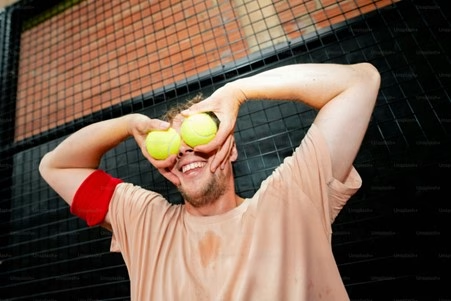
Padel is a brilliant mix of high-intensity movements and fun. You sprint, twist, react, jump, smash, recover, and rally again, all within seconds. This creates a natural interval training effect, which is one of the most effective forms of exercise.
But here’s the magic:
It doesn’t feel like a workout.
It feels like play.
That trick on the brain is powerful. People stick to activities that feel enjoyable and avoid activities that feel like work. Padel sits in the sweet spot – you burn calories, boost endorphins, and get fitter without the mental drag of “exercise.”
This is one of the big reasons players rarely fall off the wagon.
It’s not a chore.
It’s an escape.
3. The Social Glue Is Real, And It’s Strong
Sports psychologists will tell you that the social element of a sport is often more important than the sport itself. Padel is built on partnerships, teamwork, laughter, and shared wins. You face your opponent together. You celebrate points together. You laugh at mistakes together.
This shared experience releases oxytocin, the hormone linked to trust and bonding.
It explains why padel creates:
- new friendships
- WhatsApp groups
- club communities
- post-match coffees
- padel “squads”
- doubles partnerships that feel like rituals
The social side becomes a second home, and once people feel they belong somewhere… they tend to stay.
Padel doesn’t just create players.
It creates communities.
4. The Perfect Level of Challenge
Padel exists in a rare Goldilocks zone:
- Not too easy that you get bored
- Not too hard that you walk away discouraged
- Not too technical to block newcomers
- Not too chaotic to feel lost
This balance makes padel highly repeatable and deeply satisfying.
You notice small improvements every time you play:
- cleaner volleys
- steadier lobs
- smarter positioning
- better teamwork
- quicker reactions
Each step forward gives your brain a micro-reward.
You feel progress.
You feel growth.
You feel mastery.
Humans crave mastery.
Padel gives it in easy doses, and that’s why people don’t quit.

5. Identity: At Some Point, You Become a “Padel Player”
It starts as a trial game…
then a weekly session…
then you buy a racket…
then shoes…
then you join a league…
and suddenly, you’re not someone who “plays padel sometimes.”
You are a padel player.
This shift from activity to identity is one of the strongest anchors in human behaviour. When something becomes part of who you are, it becomes very hard to walk away from.
Identity is powerful.
Padel taps into that power effortlessly.
6. Low Barriers + High Rewards = Addiction Formula
Padel removes most of the friction that prevents people from staying active:
- You don’t need elite technique.
- You don’t need a full squad, only 3 other people.
- You don’t need huge courts.
- You don’t need long matches.
- You don’t need to be ultra-fit.
- You don’t need years to improve.
Yet despite the low barriers, the rewards are high:
- fast rallies
- satisfying shots
- strategic play
- teamwork
- laughs
- victories
- fitness gains
This balance of low investment and high return is rare in sports and extremely addictive.
7. Rituals Make It Stick
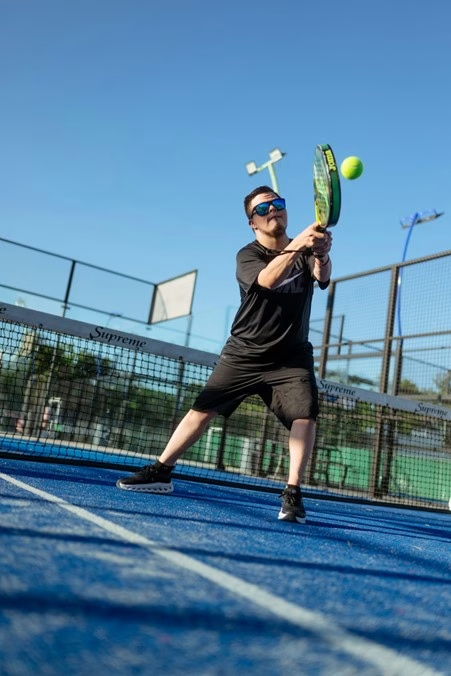
Once you start playing weekly, rituals form naturally:
- the same court
- the same partner
- at the same time of day
- the same after-match drink
- the same playlist
Rituals reduce decision fatigue.
They turn:
“Should I play?” → “I always play on Thursdays.”
This is habit science 101.
Padel doesn’t just create games, it creates routines.
And routines are what keep people returning year after year.
8. Competition & Gamification Lock Players In
Whether it’s:
- a friendly match
- a club ladder
- a weekend tournament
- or a mix night
Padel offers structured, non-intimidating competition.
This competition fuels:
- adrenaline
- focus
- motivation
- improvement
- bragging rights
Add club apps, leagues, ratings, match stats, and video highlights, and padel becomes gamified, another science-backed tool that increases engagement and keeps people hooked.
Why This Addiction Is Actually Good for You
Padel’s addictive qualities are rooted in:
- healthy brain chemistry
- active movement
- social connection
- achievable progress
- emotional reward
It’s one of the few addictions that:
- improves health
- strengthens community
- boosts confidence
- builds friendships
- supports mental wellbeing
If players manage load, warm up, and avoid overuse injuries, padel is a “good addiction.” It makes people feel alive, connected, and inspired.

The Final Smash
People don’t quit padel because the sport touches every part of the human reward system: physical, emotional, social, and psychological. It delivers joy, belonging, challenge, fitness, and identity in one tight, action-packed experience.
Padel isn’t a trend.
It’s a formula.
And it works.
This is why padel players never quit.
And why millions more are joining every year.
Share this content: