
The words every new player hears (and pretends to understand)
Padel is one of the most welcoming sports you’ll ever play – until someone shouts “bandeja”, your partner calls “chiquita”, and suddenly you’re wondering if you missed a class.
You didn’t.
Padel has its own language. A mix of Spanish roots, tennis crossover, and on-court shorthand that regular players use without thinking. For newcomers, that jargon can feel intimidating – even when everyone is friendly.
This guide isn’t here to show off.
It’s here to translate.
Why Padel Jargon Matters (More Than You Think)
Understanding the language of padel changes how the game feels.
When players know what’s being called, they:
- communicate better with partners
- move with more confidence
- avoid awkward moments
- enjoy the game sooner
Padel grows best when players feel included – not confused.
Shots You Hear Called Out Mid-Rally (The Ones That Cause Panic)
Bandeja
A controlled overhead shot played with slice, usually used to maintain net position rather than finish the point.
Why it matters:
The bandeja is about patience and control. It’s one of the most important shots in padel – and one of the most misunderstood.

The Bandeja in action
Chiquita
A soft, low shot played toward the opponents’ feet near the net.
Why it matters:
It breaks rhythm, forces awkward replies, and often opens space. Power players hate it for a reason.

The Chiquita Shot
Víbora
A more aggressive overhead shot with side spin, hit faster and lower than a bandeja.
Why it matters:
It’s used to apply pressure rather than brute force. Timing and placement matter more than power.

The Vibora in Action
Lob
A high shot sent over the opponents at the net.
Why it matters:
A good lob buys time, resets the rally, and helps you regain position. A bad lob… invites trouble.
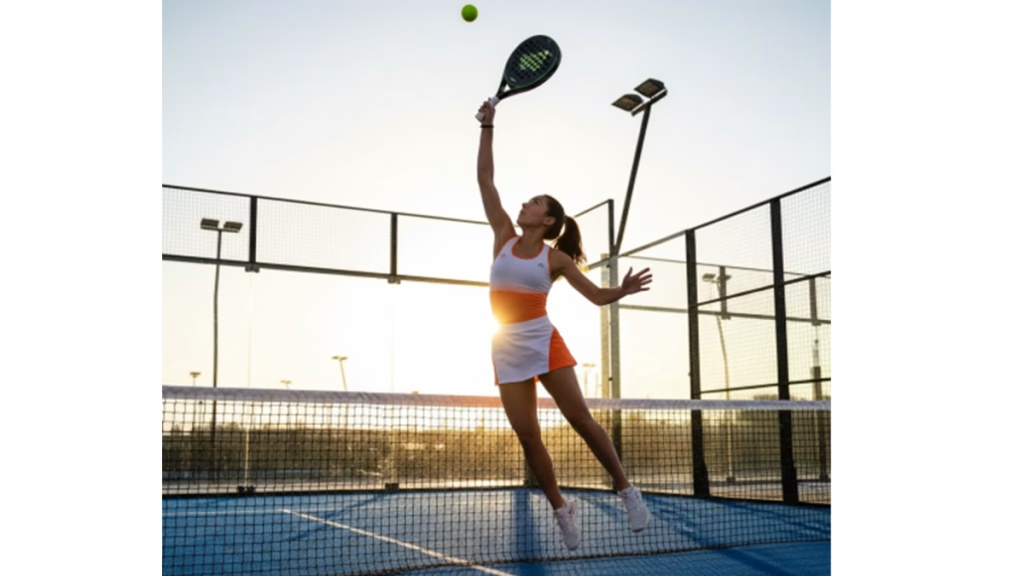
The Lob Shot
The Court & the Glass (Where New Players Panic Again)
The Glass
Those walls are not obstacles – they’re part of the game.
Why it matters:
Letting the ball rebound off the glass often gives you more time and a better angle than trying to hit it too early.
Double Glass
When the ball hits the back wall and then the side wall before being returned.
Why it matters:
It’s legal, common, and completely normal – even if it feels chaotic at first.
Fence / Mesh
The wire fencing above the glass.
Why it matters:
If the ball hits the fence after bouncing, play continues.
If it hits the fence first, the point is over.
Positioning & Match Awareness
At the Net
The most advantageous position in padel.
Why it matters:
Most points are won at the net – but only if you earn it properly.
Defensive Position
Standing back near the glass, waiting to reset the rally.
Why it matters:
Padel rewards patience. Defence is not weakness.
Cross-court vs Down the Line
The two main shot directions.
Why it matters:
Cross-court shots travel over the lowest part of the net and offer more margin for error.
Scoring Terms, You’ll Hear Early
Golden Point
A deciding point played at deuce. The next point wins the game.
Why it matters:
It adds pressure and speeds up matches – everyone knows this point counts.
Break
When the receiving team wins a game against the serve.
Why it matters:
Breaking serve often decides sets.
Tie-break
Played when the set reaches 6–6.
Why it matters:
Mistakes are magnified. Calm beats power.
The Unwritten Language: Etiquette & Culture
Calling “Mine” or “Yours”
Clear communication between partners.
Why it matters:
Silence causes more lost points than bad shots.
Respect the Glass
Don’t hit it unnecessarily.
Don’t celebrate by slapping it.
Don’t smash balls into it between points.
Why it matters:
Padel is social. Respecting the court shows respect for everyone playing.
Apologising for Net Cords
If the ball clips the net and wins you the point, a small hand raise is customary.
Why it matters:
It’s about sportsmanship, not guilt.
Partner Support
Mistakes happen. Eye-rolling and silence hurt more than errors.
Why it matters:
Padel is a team sport. Energy transfers quickly.

Padel partners talking between points during a match
Why This Language Shapes the Game
Padel jargon isn’t about sounding clever.
It’s about shared understanding.
When players speak the same language:
- rallies flow
- tension drops
- matches feel better – win or lose
That’s how padel grows the right way.
A Quick Note Before You Go
If some of these terms finally clicked – good news.
This is just the starting point. We’re already working on the next chapter for players whose game is beginning to level up.
Help Us Build It
Heard a padel term on court that confused you – or one you use all the time?
Padel’s language keeps evolving, and this guide will evolve with it.
Want the Full Version?
We’re turning this guide into a Padel Jargon PDF you can save, share, or send to friends just starting.
👉 Subscribe to padelballlife.com to get it first.
Share this content: